Fermented Red Cabbage
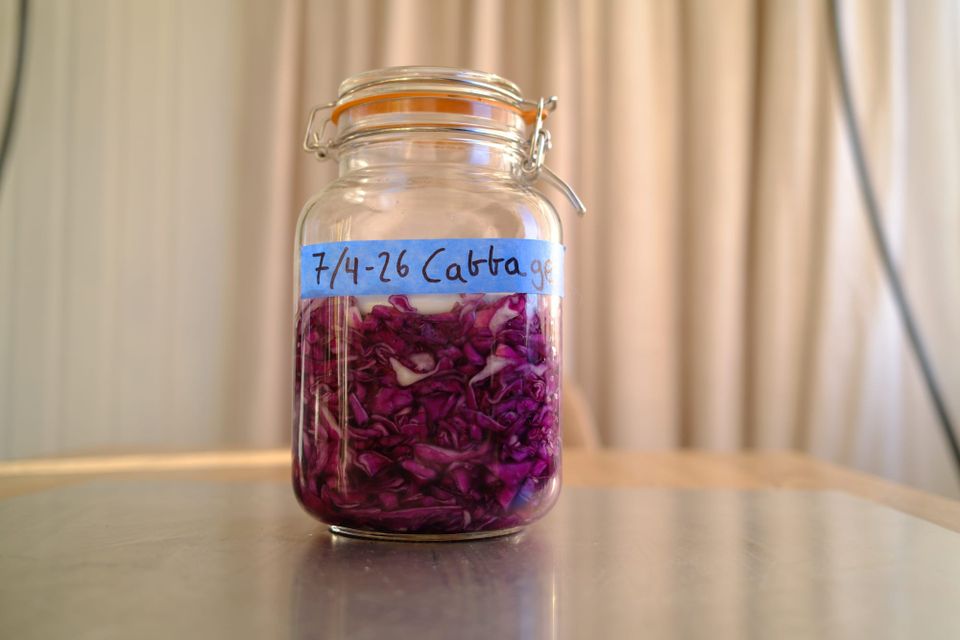
Long before refrigerators, before industry, salt and time were how we kept vegetables alive through winter. The process is simple: salt draws moisture from the cabbage, creating a brine. In that brine, lactobacillus bacteria — already present on the surface of the leaves — begin to thrive. They consume sugars and produce lactic acid, which drops the pH of the environment.
In fermentation, salt shapes the entire microbial ecology. It controls which organisms dominate, suppressing harmful microbes while giving lactobacillus the advantage. It decides who gets to live there. Two percent is the balance point — enough to create a safe environment, not so much that it stalls the process entirely.
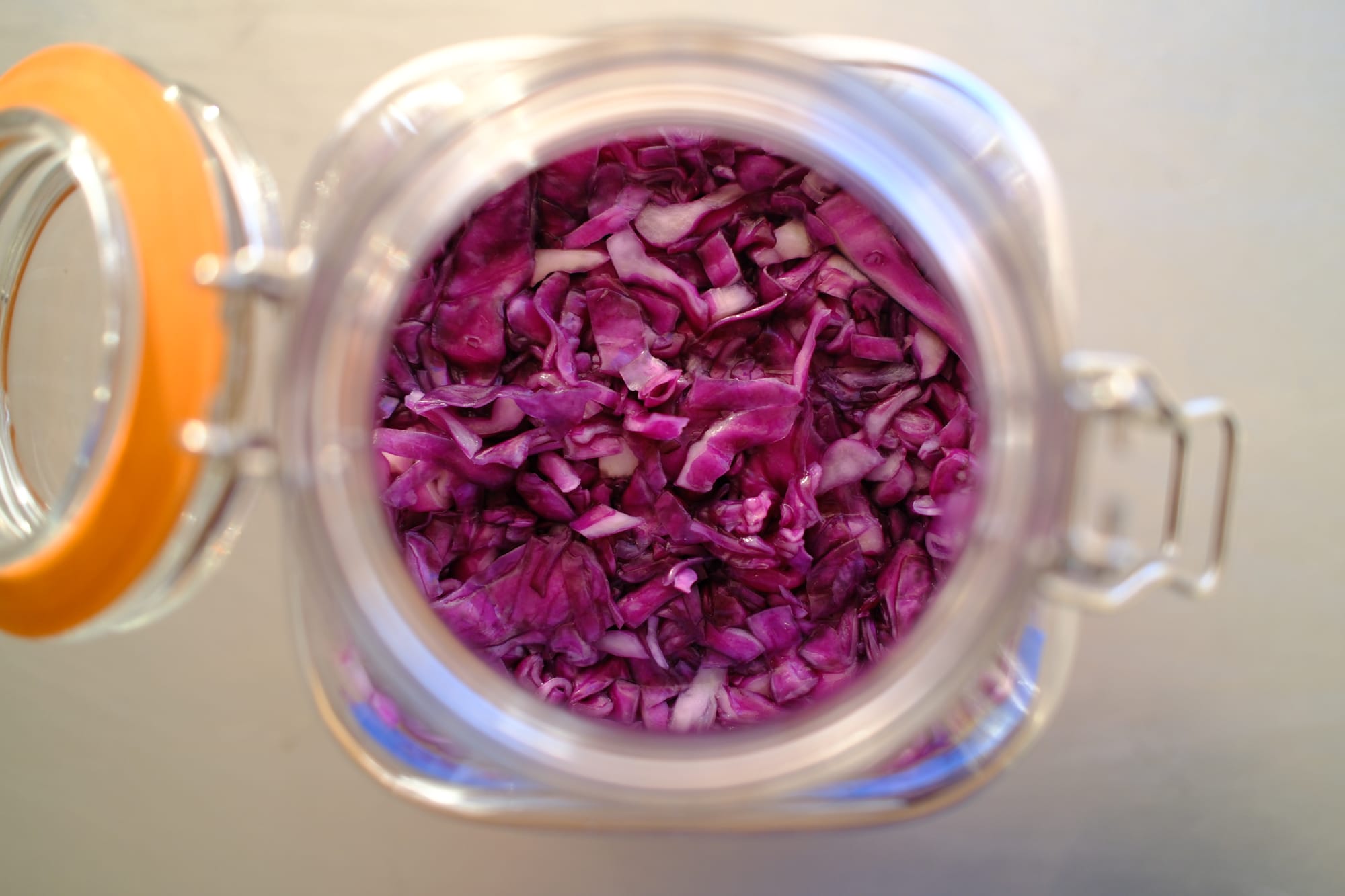
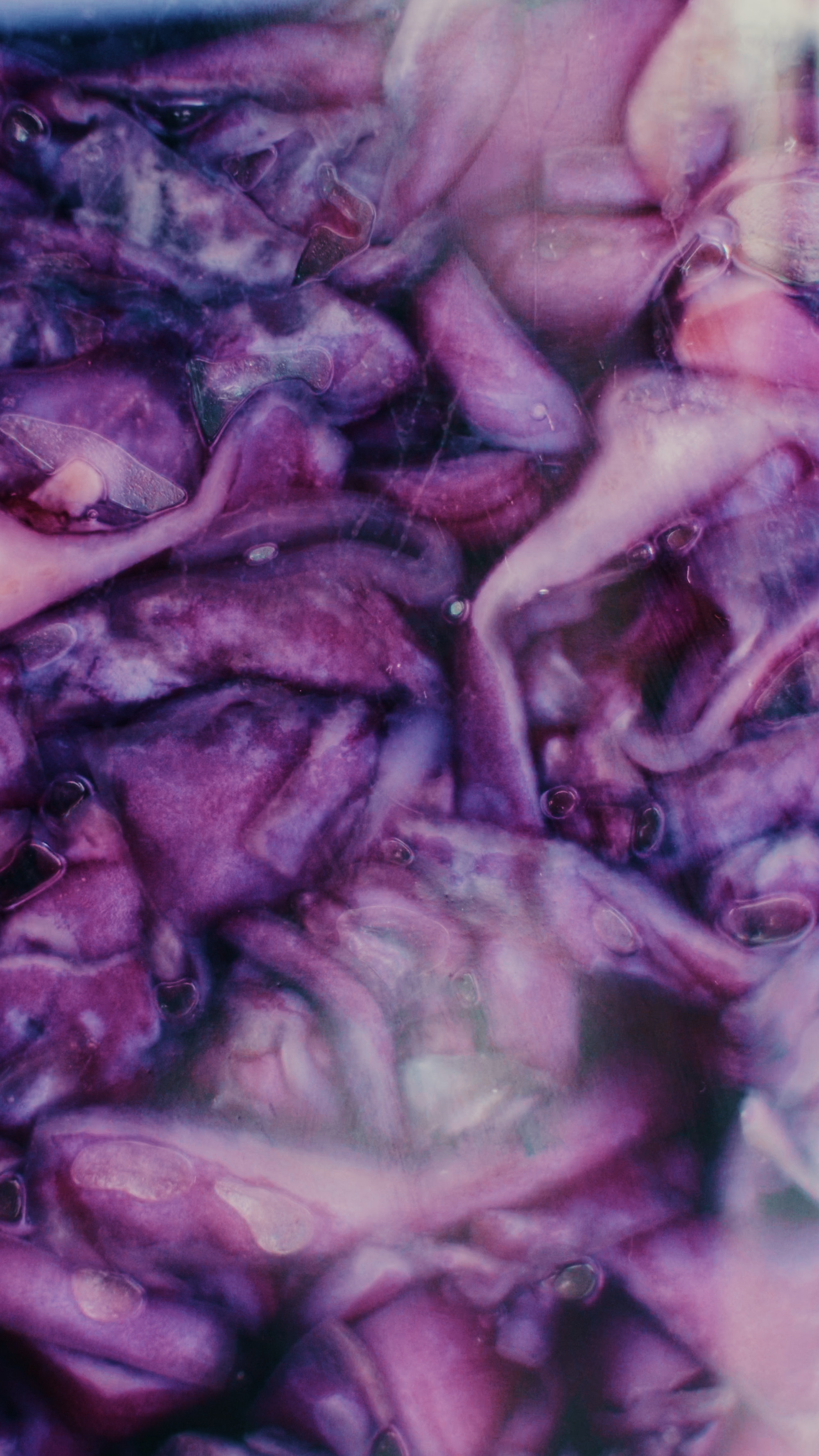
What you get back is something transformed. The colour deepens from purple into vivid magenta. The flavour shifts — sharp edges soften into something rounder, more complex, tangy and alive.
What to use it for
Fermented red cabbage is the kind of thing that makes everything around it better. A spoonful on top of a grain bowl, next to roasted squash, alongside grilled fish, folded into a sandwich, or simply eaten straight from the jar. It brings acidity, crunch, colour, and a living brightness that cooked vegetables can't quite match.
The recipe
- 1 organic red cabbage, thinly sliced 2% salt by weight of the cabbage
- Slice the cabbage thinly. Weigh it, then calculate 2% of that weight in salt. Mix the cabbage and salt together in a large bowl. Squeeze and massage until the juices release — this can take a few minutes, but you'll feel the cabbage soften and the liquid pool at the bottom.
- Taste it along the way. After three days it will be mildly tangy. After a week or two, more sour and complex. When it tastes right to you, move it to the fridge. It will keep for months.
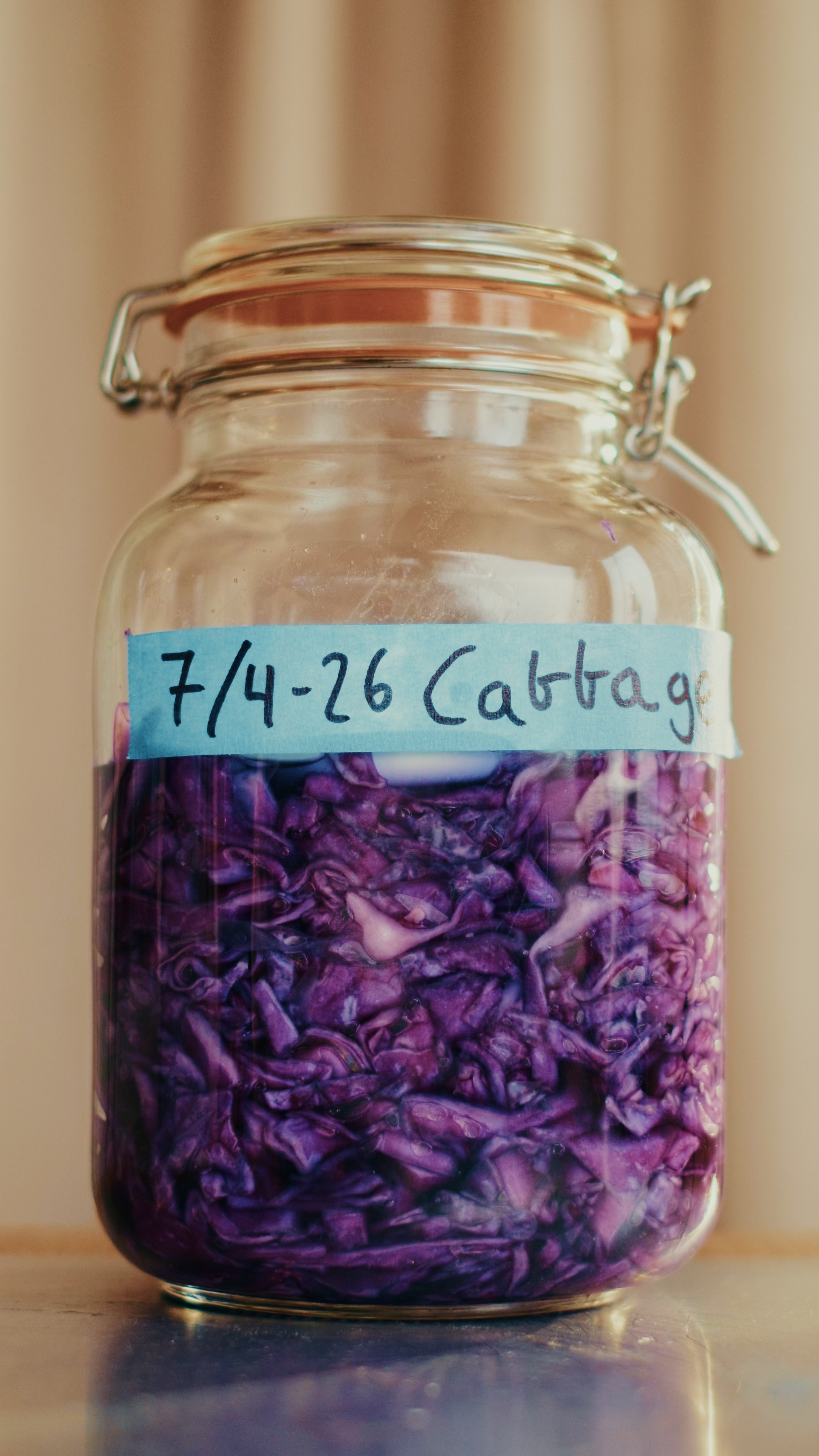
Pack it tightly into a clean glass jar, pressing down firmly until the liquid rises above the cabbage. Place a weight on top — a small plate, a zip-lock bag filled with water, or a fermentation weight — to keep the cabbage submerged. Every piece should stay below the liquid. Seal the jar and leave it at room temperature for 3 to 14 days. Burp the jar daily to release pressure.
@adrianleversby Fermented Red Cabbage Organic red cabbage, salt, a jar, and time. No technique to master — just patience. What comes back is bright, alive, and full of flavour. #fermentation #redcabbage #lactofermentation #seasonal #slowfood See the full recipe at: adrians.recipes 1 organic red cabbage, thinly sliced 2% salt by weight 1kg cabbage = 20gr salt Mix cabbage and salt. Squeeze and massage until the juices release. Pack it tightly into a clean glass jar, pressing down firmly until the liquid rises above the cabbage. Seal and leave at room temperature for 3–14 days. Burp the jar daily to release pressure. Store in the fridge
♬ original lyd - Adrian Leversby
A note on method
When fermenting in a jar, the cabbage usually releases enough liquid on its own after massaging with salt. If it doesn't fully submerge, top up with a 2% brine — calculated on the total weight of water added. When fermenting in a vacuum bag, calculate 2% of the vegetable weight alone. No water needed — the vacuum presses salt directly into the cells.
Member discussion